feature
Huế: Vietnam's Royal, Melancholy, Underrated Heart
The former imperial capital sits on the Perfume River, walled and slow, with food that is unlike the rest of the country. Most travelers pass through. Few regret staying.
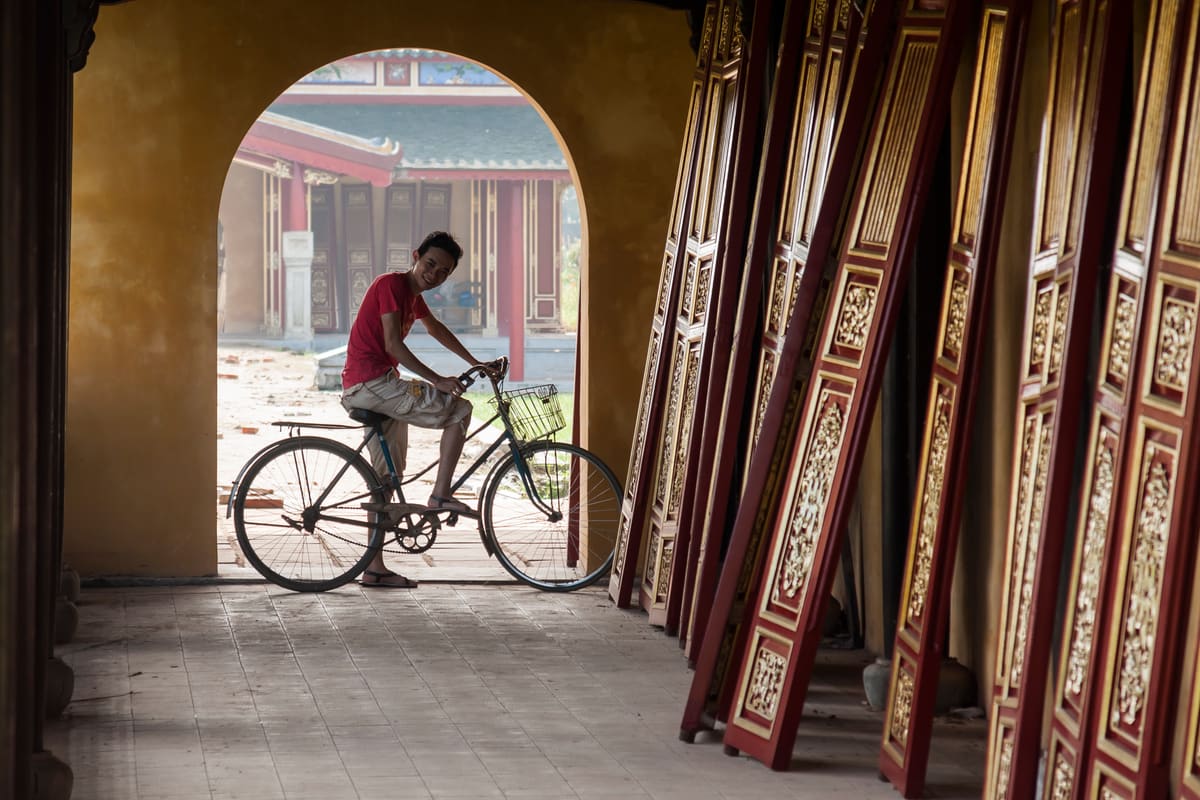
Huế was the capital of Vietnam for 143 years, from 1802 when the Nguyễn dynasty moved here from Hà Nội, until 1945 when the last emperor abdicated. The city still shows it. The Citadel on the north bank of the Perfume River is a smaller, more weathered, more atmospheric version of Beijing's Forbidden City. The tombs of the emperors scatter the countryside south of the city, each a small piece of architecture embedded in a specific landscape.
Huế is also where the Vietnam War was, in many ways, most felt. The DMZ is 90 minutes north. The war damaged 70% of the city's heritage. The reconstruction has been good, not perfect.
The Citadel
Built 1804-1833, modeled on the Forbidden City. The outer walls and the basic layout survived the war; most of the inner palaces were destroyed and have been rebuilt or are in process of being rebuilt. Walk the outer wall (3 km, free), then buy a ticket (200,000 VND, ~$8) to enter. Allow 2-3 hours. Highlights:
- Ngọ Môn Gate (the main south gate, the symbolic entrance)
- Điện Thái Hòa (the coronation hall, restored)
- Tử Cấm Thành (the Forbidden Purple City, mostly ruins being restored)
- Thế Miếu (the temple to the Nguyễn emperors)
The tombs
Each emperor built his own tomb in life, designed to his taste. They are not minimalist Confucian graves; they are mini-palaces, lakes, pavilions, and statuary scattered in 50-100 hectares of countryside. The best three to visit:
- Lăng Tự Đức (Tự Đức's tomb): Most atmospheric, lake in front, pine forest behind.
- Lăng Minh Mạng (Minh Mạng's tomb): Most architecturally rigorous, perfectly symmetrical.
- Lăng Khải Định (Khải Định's tomb): Most bizarre, 1920s European cathedral meets Vietnamese temple, all mosaic and concrete. 90% touristy but worth it.
Rent a motorbike ($5/day) or take a boat tour on the Perfume River that combines two tombs with a stop at Thien Mu Pagoda.
The food (this is the real reason to come)
Huế has its own cuisine, the most distinctive regional food in Vietnam. The royal kitchen had 50+ cooks and 200+ dishes; many survive in some form.
- Bún bò Huế: The famous spicy beef noodle soup. The city's signature dish. Every restaurant has it. Bun Bo Hue O Phuong is the famous one (O Phuong, Nguyễn Du) but there are better, less famous places.
- Cơm hến: Rice with tiny clams, peanuts, herbs, crispy rice paper. The cheap everyday Huế dish.
- Bánh khoái: A smaller, thicker, crispier cousin of bánh xèo. The local specialty pancake. Try at Madam Khanh (Pham Ngu Lao), the legendary stall.
- Bánh lọt: Pandan-flavored rice flour tubes in coconut cream and palm sugar. Cheap, sweet, perfect in the heat.
- Royal cuisine (cung đình Huế): Elaborate, ceremonial, small portions, presentation-focused. Ancient Hue Restaurant (Kim Long) does the famous version. Worth one meal.
The DMZ (day trip)
90 km north. The de-militarized zone from 1954-1975. You can visit Vinh Moc Tunnels (a village that lived underground for years), the Hien Luong Bridge, and the Ben Hai River marker. Heavily touristic but historically significant. Most agencies do a day trip from Huế for $30-50.
How long to stay
2-3 nights is enough. One day for the citadel, one day for tombs + food tour, optional day for DMZ. The city is small, walkable, slower than anywhere else in Vietnam, and the food is the real reason to come. Don't miss it.
Filed under
Plan a trip to Indonesia
Use our AI trip planner to create a personalized itinerary in 30 seconds.
✨ Try the AI trip planner