feature
Malacca: The 600-Year-Old Port That Was the Most Important City in Asia
A 1,800-km² state on the southwest coast of the Malay Peninsula, the most historically layered city in Malaysia, the UNESCO heritage zone, and the place where the Malay, Chinese, Indian, Portuguese, Dutch, and British cultures meet in one street.
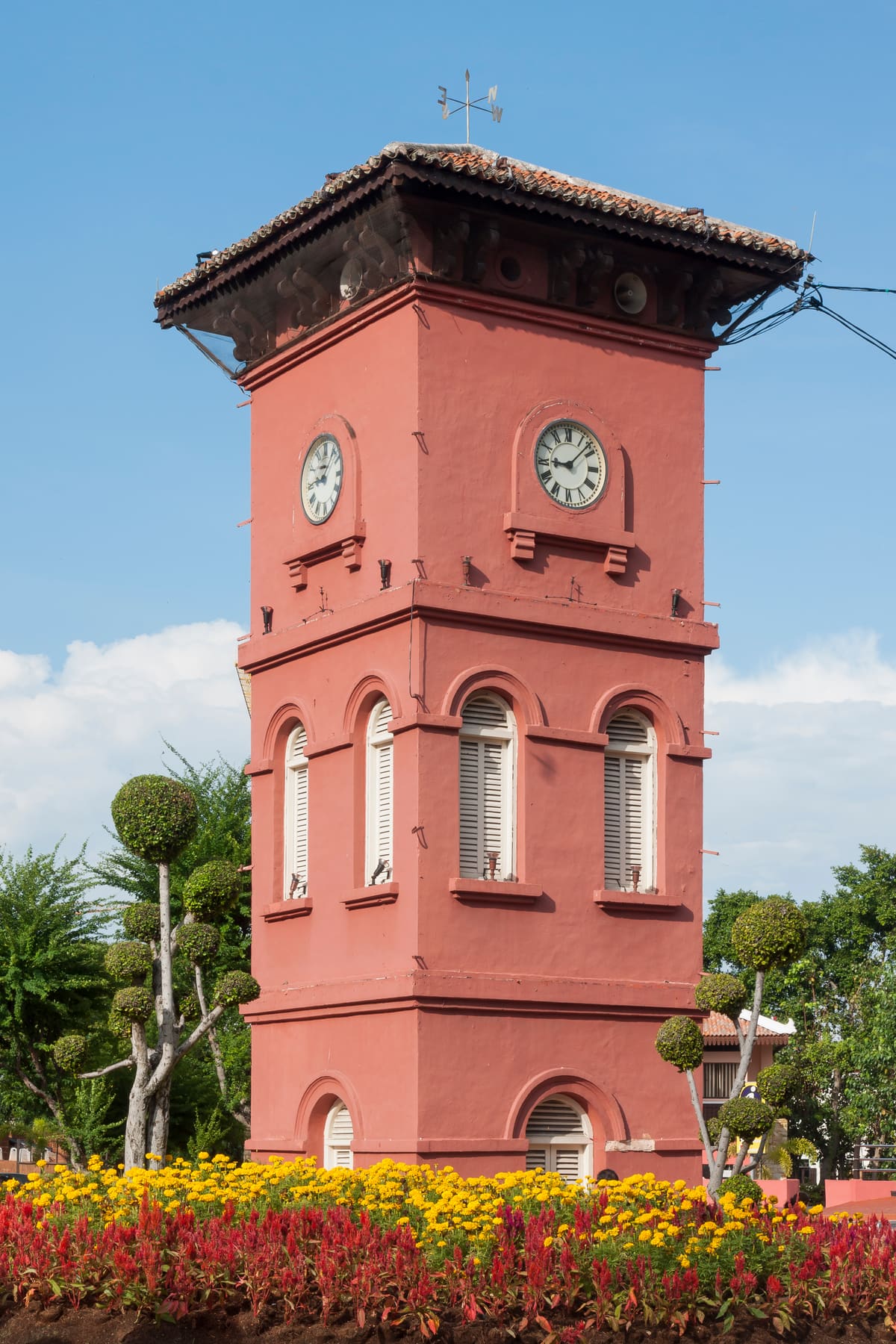
Malacca (also spelled Melaka) is a 1,800-km² state on the southwest coast of the Malay Peninsula, with the historic city as the capital. The city was the most important trading port in Asia for 100 years (1400-1511), was colonized by the Portuguese (1511-1641), the Dutch (1641-1798), and the British (1798-1946), and was recognized as a UNESCO World Heritage Site in 2008 (with George Town, Penang).
The history is the most-layered in Malaysia: the Sultanate of Malacca (1400-1511), the Portuguese fortress (1511-1641), the Dutch Stadthuys (1650-1798), the British colonial rule, the Japanese occupation, the independence. The architecture is the most-photographed: the red Dutch Square, the St. Paul's Hill, the Portuguese fortress, the Chinese temples, the mosque, the Baba-Nyonya heritage.
What to do
The Dutch Square (the red building, the most-photographed)
The 350-year-old red building complex, the most-photographed in Malaysia. The buildings: the Stadthuys (the old Dutch town hall, now a museum), the Christ Church (the Anglican church, the most-photographed building), the Clock Tower, the Victoria Fountain. The most-photographed square in the country.
A Famosa + St. Paul's Hill
The Portuguese fortress (1511, the oldest in Southeast Asia, the most-photographed ruin), the St. Paul's Church ruins (the oldest in Malaysia, 1521), the view of the city and the strait. The most-photographed history in Malaysia.
Jonker Street (the night market)
The 500-year-old Chinese street, the most-photographed night market in Malaysia. The weekend night market (every Friday-Saturday-Sunday 6 p.m. to midnight) is the headline. The food: chicken rice balls, the Nyonya cendol, the Nyonya laksa, the durian puffs, the Hainanese coffee. The atmosphere is the most authentic Chinese-Malay fusion in Malaysia.
The Baba-Nyonya Heritage
The Peranakan culture (the Chinese-Malay fusion) is most concentrated in Malacca. The Baba-Nyonya Museum (the most-photographed heritage house), the Cheng Hoon Teng temple (the oldest Chinese temple in Malaysia, 1673), the Sri Poyyatha Vinayagar Moorthi temple (the oldest Hindu temple in Malaysia, 1781), the Kampung Kling Mosque (the most-photographed mosque). The most-layered cultural mix in one neighborhood.
Maritime Museum
The replica of the Flor de la Mar (the Portuguese ship that sank in 1511, the most-photographed ship replica in Malaysia), the maritime history of the strait, the most-photographed museum in Malacca.
The river cruise
The Malacca River cruise (45 minutes, 30 MYR), the most-photographed river in Malaysia, the most atmospheric way to see the city. The painted murals along the river, the Chinese houses on stilts, the most-photographed views of the city.
How to get there
From Kuala Lumpur: 2 hours by bus ($5-10), 1.5 hours by car. The most common day trip from KL.
From Singapore: 4-5 hours by bus, the most direct route from Singapore to historical Malaysia.
How long to stay
1 day for the highlights (the Dutch Square, Jonker Street, the Baba-Nyonya heritage). 2 days to include the river cruise and the slow wandering. 3 days to add the surrounding countryside.
Where to stay
Jonker Street area: The most atmospheric, the most central. The heritage guesthouses, the boutique hotels in the old shophouses, the mid-range options.
Mahkota area: The most modern, the most mall, the most family-friendly. The mid-range hotels, the chain hotels.
Cost (2 days, per person, 2 sharing, mid-range)
- Accommodation: $30-100/night × 2 = $60-200
- Food: $10-25/day = $20-50
- Activities: $10-20
- Transport from KL: $10-20
- Total: $100-290
Filed under
Plan a trip to Indonesia
Use our AI trip planner to create a personalized itinerary in 30 seconds.
✨ Try the AI trip planner