feature
Phuket: The Pearl of the Andaman, the Island That Was, the Island That's Coming Back
Thailand's largest island, 574 km², 70 km of beaches, the diving capital of the Andaman, the old town of Sino-Portuguese architecture, the package-tour beach, and — under the over-touristy surface — a working Thai-Chinese port city that has kept its character.
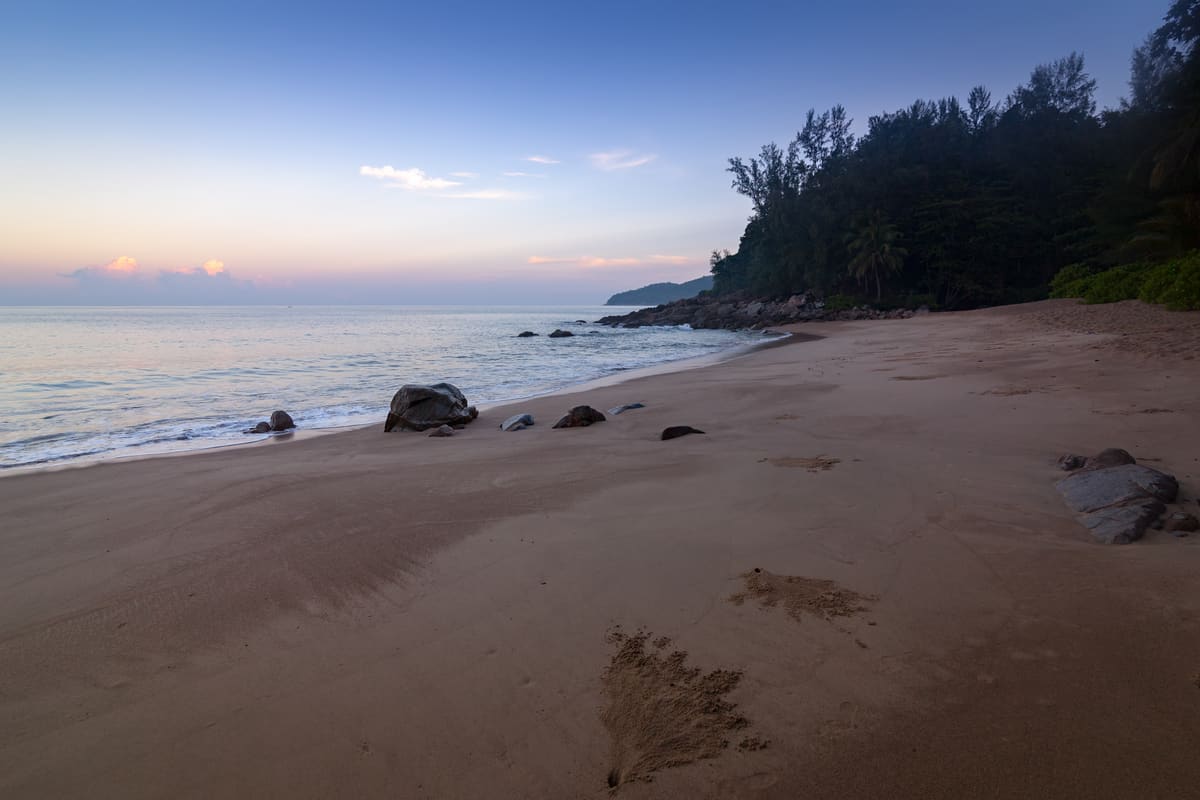
Phuket is Thailand's largest island, 574 km² connected to the mainland by a 660-m bridge. The name is from the Malay "Bukit" (mountain) — the Chinese-Thai port city that has been trading tin and rubber for 200 years. The beaches are the headline; the old town is the surprise.
Phuket had a tin-mining boom in the 19th century, brought in Chinese labor from Fujian and Hokkien, and the resulting Sino-Portuguese architecture is the most-photographed street in southern Thailand. The Phuket Old Town has the most beautiful shophouses in the country, the most authentic Chinese-Thai food, the most-photographed street (Thalang Road, the Phuket Old Town Festival in February, the Sunday Walking Street in the evening).
What to do
The beaches
Phuket has 30+ beaches on the west (Andaman) and south coasts. The famous ones:
- Patong: The package-tour beach, the most developed, the most crowded, the most Bangla Road (the nightlife, the red-light street). The backpacker and package crowd.
- Karon: The longer, less crowded, more family-friendly beach. The resorts, the restaurants, the slow pace.
- Kata + Kata Noi: The smaller, more photogenic, more expensive. The family crowd and the high-end hotels.
- Nai Harn: The local beach, the most beautiful, the least developed. The expat favorite.
- Surin: The most exclusive, the most beautiful, the "Millionaire's Row" of Phuket. The Aman, the Twinpalms, the most expensive real estate.
- Mai Khao: The north coast beach, the Sirinat National Park, the turtles nest here. The longest, the least crowded.
The Old Town
The 100-year-old Sino-Portuguese architecture is the most beautiful in Thailand. Thalang Road, Phang Nga Road, the Sunday Walking Street (every Sunday 4-10 p.m.), the Peranakan food (the Hokkien-Chinese-Malay fusion, the Hokkien noodles, the O-Aew dessert). The shophouses are now cafes, boutiques, and small museums. The atmosphere is the most distinctive in Thailand.
The day trips
- Phi Phi Islands: The 2-hour boat trip from Phuket, the most famous day trip in southern Thailand. The Phi Phi Don, the Maya Bay (the beach from "The Beach"). The day trip is $30-50, the boats leave from Chalong Pier. Maya Bay is now closed to boats (since 2018) for reef restoration, but the viewpoint is open.
- James Bond Island (Phang Nga Bay): The 1-hour boat trip, the limestone karst that was in "The Man with the Golden Gun." The day trip includes canoeing through the caves. $40-60.
- Similan Islands: The 2.5-hour boat trip, the most beautiful dive sites in Thailand, open November to May only. The day trip is rushed; the liveaboard is the way to do it. $80-150 for a day trip, $400-800 for 2-3 day liveaboard.
- Phang Nga Bay: The general area, the limestone karsts, the floating villages, the sea gypsies. The day trip is the most scenic. $40-60.
The diving
Phuket is the diving capital of the Andaman. The best sites:
- Similan Islands: The world-class, open Nov-May.
- Koh Phi Phi: The day-trip diving, the reef sharks, the visibility.
- King Cruiser Wreck: A 100-m ferry wreck sunk in 1997, the most famous wreck in Thailand. 30 m deep.
- Racha Noi + Racha Yai: The closer dive sites, the day-trip option, the pelagics.
The viewpoints
- Big Buddha: The 45-m Buddha on the hill, the most-photographed. Free.
- Promthep Cape: The southernmost point, the most-photographed sunset.
- Karon Viewpoint: The "Three Beaches" view, Kata Noi + Kata + Karon.
When to go
November to March: The best months. Dry, calm, 25-32°C. The peak season.
April to October: The rainy season. The rain is heavy but short. The prices drop 30-50%. The west-coast beaches (Patong, Kata, Karon) are affected by the southwest monsoon. The east coast is calmer.
How long to stay
4-5 days. 2 days for the Old Town and the beaches, 1 day for Phi Phi, 1 day for Phang Nga, 1 day for the diving or a beach day.
How to get there
Direct flights from Bangkok (1.5 hours, $50-100), Singapore (1.5 hours), Kuala Lumpur (1.5 hours), and most major Asian cities. The airport is on the north of the island, 30-50 minutes from the main beaches.
Where to stay
Old Town: The most atmospheric, the cheapest, the most authentic. The boutique guesthouses on Thalang and Phang Nga roads.
Patong: The most developed, the most touristy, the most night-life. The package hotels, the budget guesthouses.
Karon + Kata: The most family-friendly, the best value, the most relaxed.
Surin + Bang Tao: The most exclusive, the most expensive, the most beautiful.
Cost (4 days, per person, 2 sharing, mid-range)
- Accommodation: $50-200/night × 4 = $200-800
- Food: $20-40/day = $80-160
- Activities (boat trips, diving): $100-300
- Transport (car rental or taxi): $50-100
- Total: $430-1,360
Filed under
Plan a trip to Indonesia
Use our AI trip planner to create a personalized itinerary in 30 seconds.
✨ Try the AI trip planner