feature
Thai Food: The Balance Principle and the Five-Flavor Rule
Thai food is the most-discussed cuisine in the world, and the most-misunderstood. Here's the cultural logic, the regional schools, the dishes you should know, and the street food etiquette.
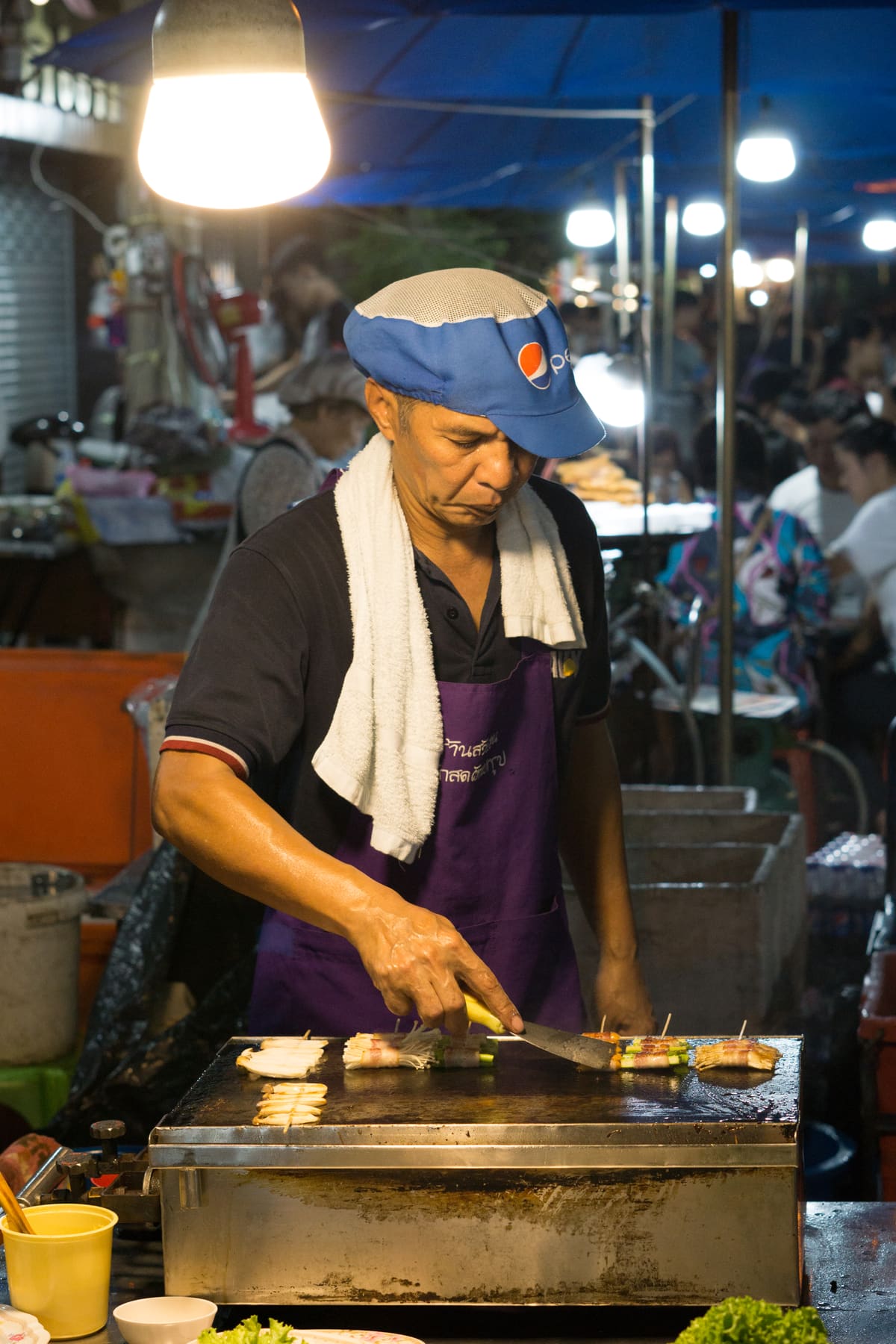
Thai food is the world's most-discussed national cuisine, and the most-misunderstood. Outside Thailand, "Thai food" means pad thai, green curry, and tom yum. Inside Thailand, the food has at least 5 regional schools, the balance principle is the cultural logic, and the food is the most-refined street food in the world.
The balance principle
Every Thai dish balances five flavor elements: sour, sweet, salty, spicy, and umami. The balance is the art. Too much of one and the dish is "off." A good Thai cook is constantly adjusting — adding a little fish sauce (salty/umami), a little palm sugar (sweet), a little lime juice (sour), a little chili (spicy), until the dish sings.
The other principle is the texture: Thai food is almost always a contrast of textures. The crunch of peanuts on a pad thai, the crispy-fresh of a green papaya salad, the soft-chewy of a sticky rice, the crunch-soft of a fried fish with a herb salad on top.
The four regional schools
Central Thai (Bangkok)
The most internationally famous. The royal-court cuisine, the coconut-milk curries (green, red, massaman, panang), the pad thai (a 20th-century nationalist invention, originally Chinese-influenced), the tom yum (the famous hot-and-sour shrimp soup). The flavor balance: sweet-salty-spicy, with coconut milk as a base. The texture: soft-chewy-crispy, with rice as the starch.
Representative dishes: pad thai, green curry, tom yum goong, massaman curry, mango sticky rice, boat noodles.
Northern Thai (Chiang Mai, Lanna)
The Lanna kingdom cuisine, the most distinctive, the most unfamiliar to international visitors. Less coconut milk, more herbs (the northern laab uses mint, cilantro, dill, green onion), the use of bitter (the pickled mustard greens, the bitter melon), the use of roasted elements (the roasted chili paste, the smoked pork). The starch is sticky rice (khao niao), eaten with the hands, dipped into the dish.
Representative dishes: khao soi (the curry noodle soup, the most famous northern dish), laab (the minced-meat salad, originally from Isaan but adopted), sai ua (the northern sausage, the herbs in it are distinct), nam prik num (the roasted green chili dip).
Isaan (Northeast Thailand)
The Lao-Thai cuisine, the most distinctly Thai, the most flavorful, the most underestimated. The dishes that Thai people themselves eat at home. Heavy on fermented elements (padaek, the fermented fish sauce of Laos; pla ra, the fermented fish of Isaan), heavy on the chili, heavy on the lime, heavy on the fresh herbs. Eaten with sticky rice.
Representative dishes: som tam (green papaya salad, the most famous), laab (the minced-meat salad, the Isaan version), tom saep (the spicy Isaan soup), grilled chicken (gai yang), jaew (the dipping sauces).
Southern Thai
The Malay-influenced cuisine, the most intense. Heavy on coconut milk (more than central), heavy on turmeric, heavy on the seafood (the south is the coast), heavy on the sour (tamarind, lime). The dishes are spicier and more sour than central Thai. The curries are distinct (the massaman is southern, originally from the Muslim community in the south).
Representative dishes: massaman curry, gaeng som (the sour fish curry), khua kling (the dry minced-meat curry), satay, the southern fish curries.
The dishes you should know
A working list, in order of how often you'll see them:
- Pad thai: Stir-fried rice noodles, egg, tofu or shrimp, bean sprouts, peanuts, lime, fish sauce, palm sugar. The most internationally famous. A 20th-century invention. Still delicious. The street version is the standard.
- Tom yum goong: The hot-and-sour shrimp soup. Lemongrass, galangal, kaffir lime, chili, lime juice, fish sauce, shrimp. The balance of sour-spicy-salty. The most aromatic soup in the world.
- Green curry (gaeng keow wan):strong> The green curry is named for the green chili. Coconut milk, green curry paste, chicken or beef, Thai basil, eggplant, kaffir lime. Served with rice.
- Massaman curry: The Muslim-influenced curry, the most complex. Coconut milk, massaman paste (dried chili, cardamom, cinnamon, cloves, cumin), beef or chicken, potato, peanut, tamarind. The most mild of the Thai curries. The most popular with non-Thai palates.
- Som tam (papaya salad): Shredded green papaya, tomato, green beans, peanuts, garlic, chili, fish sauce, lime juice, palm sugar, sometimes dried shrimp. The balance of sweet-sour-spicy-salty-umami. The most refreshing dish in Thailand.
- Laab: Minced meat (pork, chicken, beef, or duck), toasted rice powder, mint, cilantro, green onion, chili, fish sauce, lime. The northern/Isaan dish. Eaten with sticky rice and raw vegetables.
- Mango sticky rice (khao niao mamuang): Sweet sticky rice, fresh ripe mango, coconut milk, sesame seeds or mung beans. The dessert. The only dessert on this list.
- Pad see ew: Wide rice noodles, dark soy sauce, Chinese broccoli, egg, meat. The most popular of the noodle dishes. The "I want Thai food" choice.
- Boat noodles (kuay teow reua): The small-bowl noodle soup, originally sold from boats. Pig's blood, herbs, beef or pork, the small portion is the point. You order 4-5 bowls.
- Khao soi: The northern curry noodle soup. Egg noodles in a curry broth (the broth is the dish), chicken or beef, pickled mustard greens, shallots, lime, the crispy noodles on top. The most photogenic bowl in Thailand.
Street food etiquette
- The vendor with the longest queue of Thai people is the one you want. The vendor with the most foreign tourists is often the one the Thais stopped going to.
- If a vendor is in a specific spot every day, the spot is the brand. They were there yesterday, they'll be there tomorrow.
- Eat the same dish at 3-4 different vendors. The variation is the lesson.
- The plastic stools are the standard furniture. Don't expect a chair. The food is the point.
- Tipping is not expected. The price on the menu is the price.
- Order multiple dishes and share. Thai food is designed for sharing. 2-3 dishes per person for a meal.
What to know about the food safety
Thailand has the best street food safety record in Southeast Asia. The vendors are licensed, the food is cooked in front of you, the turnover is fast, the temperatures are hot, and the meat is generally fresh. The water: the ice is safe (factory-made from clean water), but don't drink the tap water.
The thing to watch for: the cut fruit. The vendors in markets cut it on a board, leave it out, and the surfaces aren't always clean. Either get the fruit that you see being cut in front of you, or get the fruit that you peel yourself.
Where to eat the best food in Thailand
- Yaowarat Road, Bangkok, 8-11 p.m.: The Chinatown street food, the headline.
- Or Tor Kor Market, Bangkok: The high-end market, the cooked food stalls are Michelin-recommended.
- Chiang Mai's Sunday Walking Street: The food section is excellent, the H'Mông sausage is the thing.
- Chiang Mai's khao soi shops: Khao Soi Khun Yai, Khao Soi Mae Sai, Khao Soi Mae Manee — the most famous.
- Hat Yai, the deep south: The food capital of southern Thailand, the most underrated food city in the country.
- Phuket old town: The Peranakan food, the Sino-Thai fusion, the Hokkien noodles, the O-Aew dessert.
The drinks
- Thai iced tea (cha yen): The orange milk tea, the sweet one, the standard.
- Thai iced coffee: Strong coffee, condensed milk, ice.
- Fresh coconut water: The young coconut, served with the straw in. $0.50-1.
- Singha, Chang, Leo: The three big Thai beers. The standard. 60-90 THB at a 7-Eleven.
- Mekhong whiskey: The Thai whiskey, the sugarcane-and-rum flavor, 35% alcohol, the local spirit. The Thai version of a Mekong boatman's drink.
- Cha-bao-sung (the bottled herbal drinks): The green ones, the red ones, the brown ones. The Baimaithong, the Bel herbal drinks. Sweet, herbal, refreshing.
What to skip
- The "Thai food" at your local takeout: It's not the same. The real Thai food is more sour, more spicy, more herbal, and uses ingredients you can't get at the supermarket.
- The tourist restaurants with English menus and pictures: They're usually more expensive and the food is more "balanced" (i.e., muted) for the foreign palate. The Thai-Thai places are better.
- The "Thai-Italian fusion" or "Thai-fusion" places: Most of them are bad. The traditional food is the art.
Filed under
Plan a trip to Indonesia
Use our AI trip planner to create a personalized itinerary in 30 seconds.
✨ Try the AI trip planner