Vietnamese coffee: the complete guide
Cà phê sữa đá, egg coffee, coconut coffee, and the 30-year-old beans behind them all.
By Ketut Sari·3 min read
# Vietnamese coffee: the complete guide
Vietnam is the world's second-largest coffee producer, after Brazil. It grows more than a million tons of robusta a year, plus a smaller but high-end arabica crop in the central highlands. Almost all of it gets exported, blended into mass-market instant coffee, and shipped around the world.
What stays in Vietnam is the good stuff.
## The beans
Vietnam's coffee is mostly robusta — a higher-caffeine, more bitter, more full-bodied bean than the arabica that dominates specialty coffee elsewhere. Vietnamese robusta, especially from the Central Highlands (Đắk Lắk, Lâm Viên, Buôn Ma Thuột), has a depth that hides behind the bitterness — dark chocolate, walnut, sometimes a tobacco note. It's not subtle coffee. It's coffee that hits.
The arabica crop is smaller and grown at altitude. Da Lat and the northern mountains produce beans that compete with anything from Ethiopia or Colombia, but most stays in Vietnam.
## Cà phê sữa đá
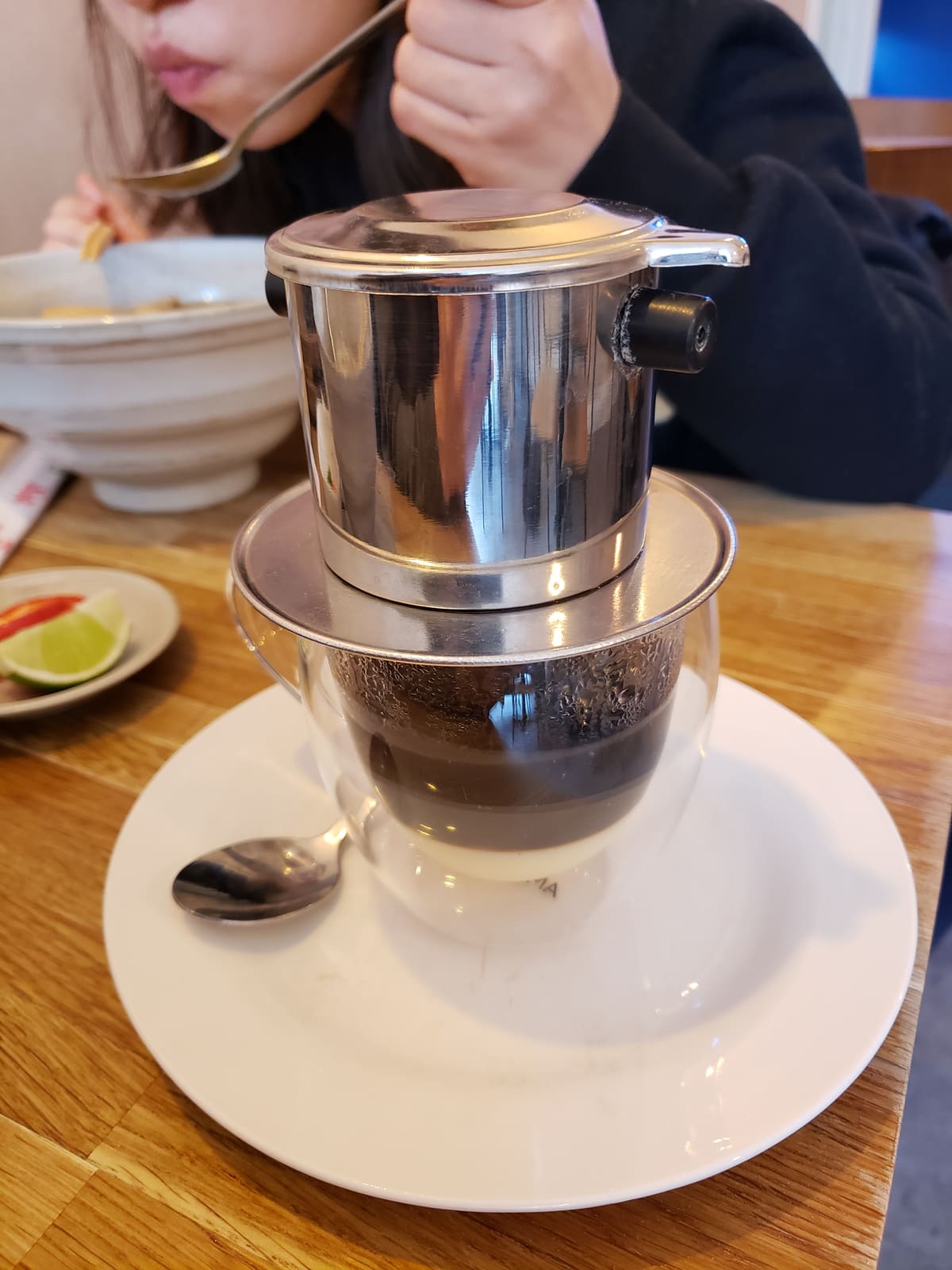
The classic. Strong robusta brew, dripped through a phin (a small metal filter that sits on top of the cup), poured over ice with a thick layer of sweetened condensed milk at the bottom. Sweet, strong, almost a dessert.
The phin is the secret. The slow drip — three to five minutes — extracts more from the bean than any espresso machine would. The condensed milk isn't a substitute for fresh milk; it's a different drink entirely.
## Egg coffee (cà phê trứng)
Hà Nội's signature. Invented in the 1940s during a milk shortage, when a bartender used egg yolk instead. The result is a creamy, custard-like drink that tastes like tiramisu in liquid form.
The good ones are at small cafés around the Old Quarter. The most famous is Café Giảng, where the recipe hasn't changed in 70 years.
## Coconut coffee (cà phê dừa)
A southern Vietnam thing. The phin drips directly into a glass of fresh coconut cream, no condensed milk. The result is lighter and fresher than cà phê sữa đá, with the coconut fat balancing the robusta bitterness.
Found at street stalls throughout the Mekong Delta and increasingly in HCMC.
## Where to drink
- **Hà Nội:** Café Giảng for egg coffee. The Loading T for specialty. Any street stall for cà phê sữa đá.
- **HCMC:** The Coffee House (chain, but consistent). The workshop-style cafés in District 1.
- **Đà Lạt:** The highlands. Visit a working farm. Drink the freshest arabica you'll ever have.
## What to bring home
Whole-bean Vietnamese robusta from any roaster. Lê Thị or Highlands Coffee for bagged. Instant 3-in-1 (coffee, sugar, milk powder) is the Vietnamese cliché that everyone secretly loves.
## A note on prices
Vietnamese coffee is one of the great bargains of the country. A proper cà phê sữa đá at a streetside stall: 12,000-20,000 VND (50-80 cents USD). Even at a specialty café in HCMC, you're paying $2-3 for a drink that would be $6 in New York.
Plan a trip to Indonesia
Use our AI trip planner to create a personalized itinerary in 30 seconds.
✨ Try the AI trip planner