Mui Ne
Khánh HòaVietnam
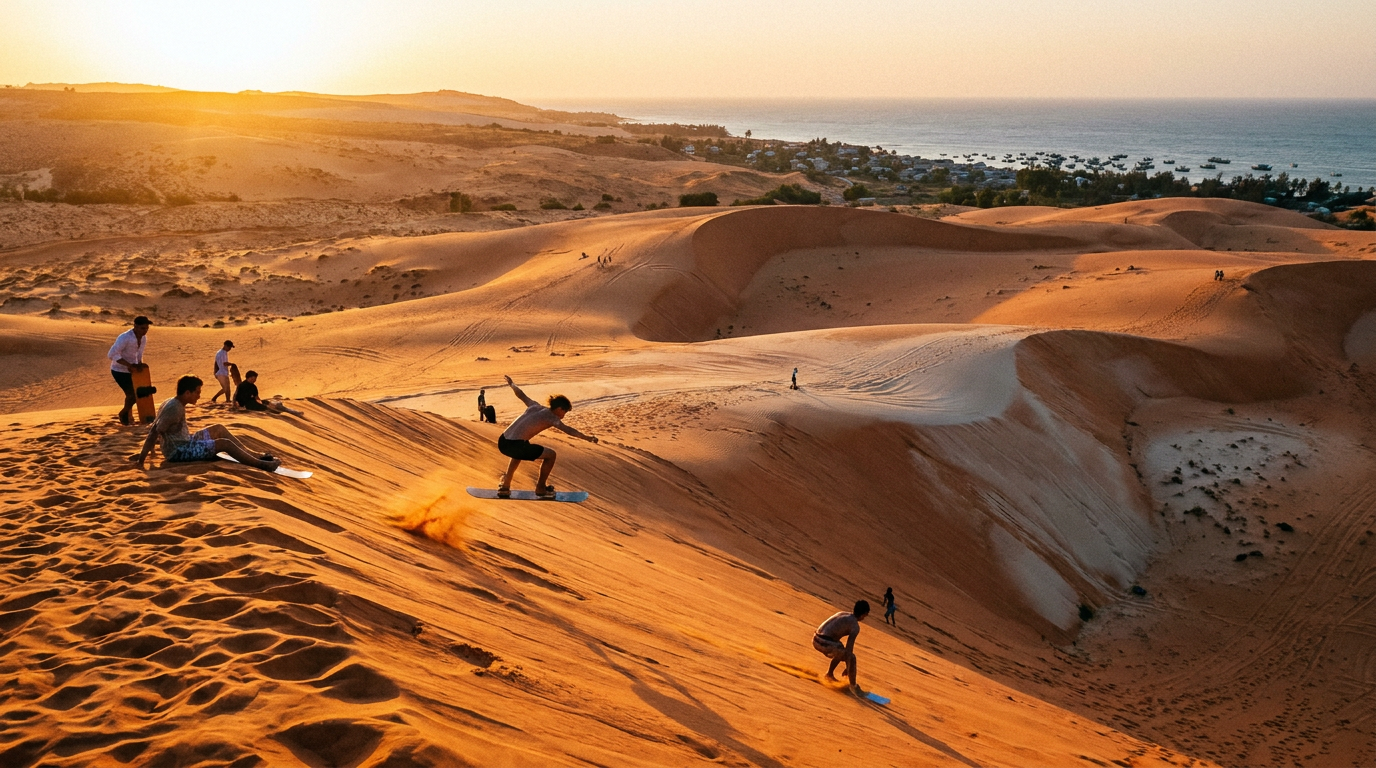
Vietnam's sandboarding capital — red and white sand dunes, kitesurfing, and the famous 'fairy stream'.
📸 Gallery
5 photosDid you know?
Vietnam's sandboarding capital — red and white sand dunes, kitesurfing, and the famous 'fairy stream'.
Cultural & historical context
<p>Mui Ne exists within the broader context of Vietnam, where vietnam stretches 1,650 km from the chinese border to the mekong delta, with terrain that varies from limestone karsts to rice terraces to long beaches. french colonial architecture, chinese influence, and a 20th-century war history combine to make vietnam one of asia's most layered destinations.</p> <p>The local culture at Mui Ne reflects centuries of evolution — indigenous traditions blending with regional influences, then colonial impacts, then modern globalization. Understanding this layering helps visitors appreciate what they're seeing beyond the surface.</p> <p>The economy of Mui Ne and its surroundings has been shaped by geography, history, and proximity to major trade routes. Vietnamese Dong (VND) is the local currency. Vietnamese is the primary language, though English is often spoken in tourist areas.</p> <p>Practical information for travelers: Most nationalities get 30-day e-visa or visa exemption. Local emergency numbers are Police 113, Ambulance 115. The time zone is ICT (UTC+7).</p>
Key facts
- ◆Mui Ne is in Vietnam
- ◆Vietnam's sandboarding capital — red and white sand dunes, kitesurfing, and the famous 'fairy stream'.
Best for
Good to know
- ✓Carry small change for street vendors and parking attendants
- ✓Tap water is not safe to drink — stick to bottled water
- ✓Dress modestly when visiting religious sites (cover shoulders and knees)
- ✓Vietnamese food can be spicy — ask for "ít cay" (less spicy)
- ✓Tipping is not customary but appreciated (10%)
- ✓Always check your bill — overcharging is rare but happens
Getting there
<p>Most visitors to Mui Ne arrive by air or overland transport from a major hub. The nearest international airport has regular flights from regional capitals. Local transport — taxis, ride-hailing apps, or public buses — connects the airport to the city center.</p> <p>For travelers coming from other destinations in the region, train and bus services provide affordable alternatives. Book tickets in advance during peak travel seasons.</p> <p>Within Mui Ne, transportation includes local buses, taxis, and ride-hailing apps. Many of the main attractions are walkable from the city center.</p>
What to do at Mui Ne
10 things to do
Top-rated attractions, activities, and landmarks

Cooking Class of Mui Ne
Half-day market-to-table — cook 4-5 local dishes, eat what you made.

Night Market of Mui Ne
Open-air food court — 30+ stalls, plastic stools, cheap and excellent.

Coffee Shop of Mui Ne
Local roastery — single-origin beans, traditional brew, pastries.

Cultural Show of Mui Ne
Traditional dance performance with regional buffet.

Main Temple of Mui Ne
The town's main religious site — central spire, daily offerings.

Botanical Garden of Mui Ne
Tropical gardens — orchids, lotus ponds, walking paths.

Riverside Walk of Mui Ne
Sunset walk along the river — food carts and the city's best light.

Old Town of Mui Ne
The historic center — colonial architecture, narrow lanes, and centuries of street life.
Heritage Museum of Mui Ne
The city's flagship museum — local history from prehistory to today.

Central Market of Mui Ne
Main bazaar — produce, spices, and the best breakfast in town.
Country snapshot
🍜 Vietnamese phở is on UNESCO's Intangible Cultural Heritage list (2024).
Other places in Khánh Hòa
See Khánh Hòa guide →
Nearby places
Finding places nearby…