Kuala Lumpur in 2 Days: The Petronas, the Batu Caves, the Food
How to spend 2 days in Malaysia's capital without rushing
By Ketut Sari · 4 min read
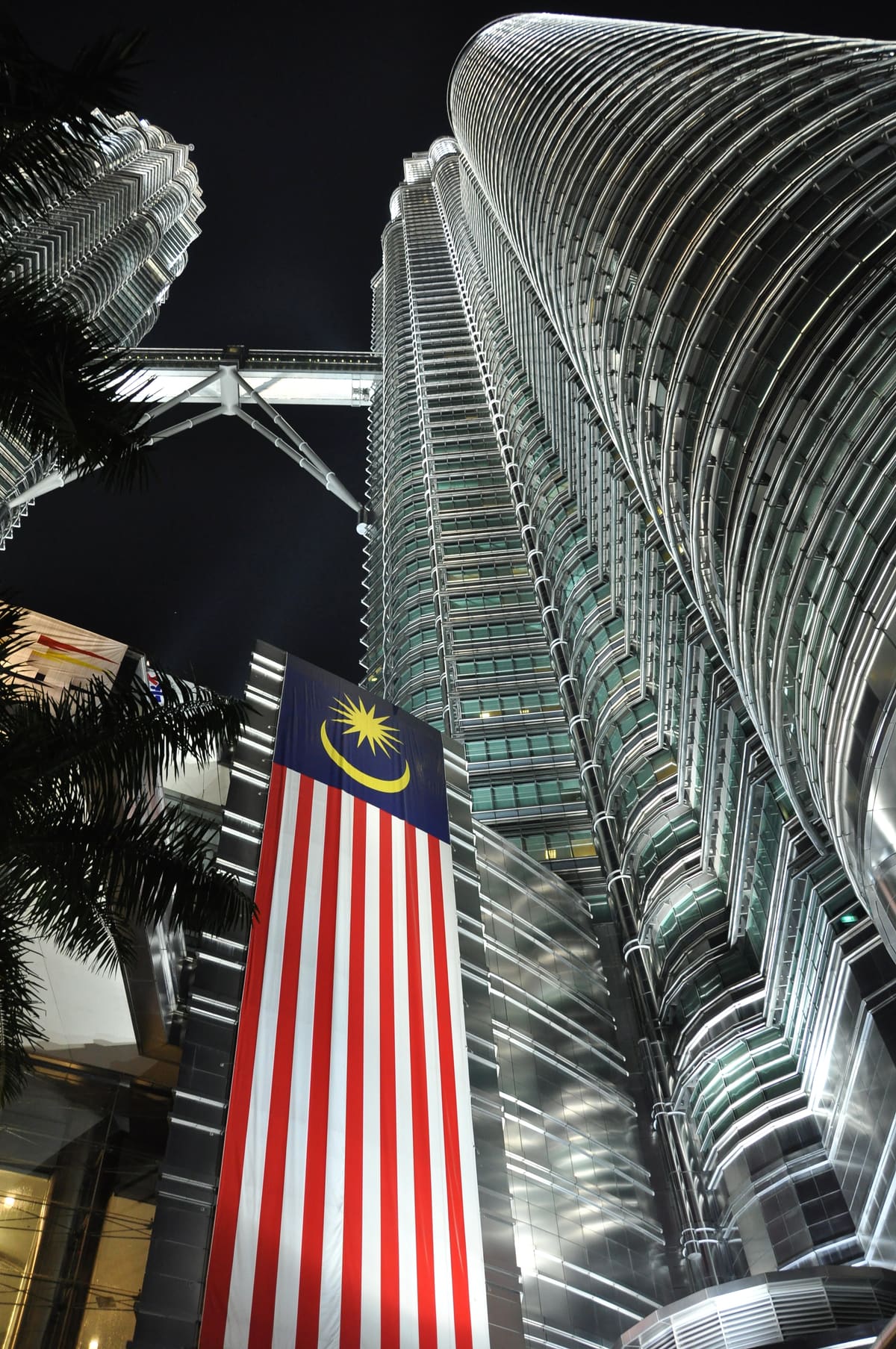
Kuala Lumpur is the most cosmopolite city in Malaysia, the 8-million-person megacity, the city that built the world's tallest twin towers, and the food capital of Southeast Asia. 2 days is the right length for a first visit. This is the plan.
Day 1: The Petronas + the colonial history + the food
8:00 a.m. — Petronas Towers + KLCC (the must-see)
The 88-story twin towers, 451.9 m tall, the most-photographed. The view from the observation deck (170 m up) is the most-photographed. The KLCC park at the base is the most-photographed public space. The Suria KLCC shopping mall underneath is the most-upscale. 98 MYR observation deck entry. 2-3 hours for the tower + the park.
10:30 a.m. — Merdeka Square + the colonial history
The 100-year-old colonial center, the flagpole where the Malaysian flag was first raised in 1957. The Sultan Abdul Samad Building (the Moorish-style government building), the Royal Selangor Club, the National Mosque (the most-photographed mosque in KL). The most-photographed colonial architecture in Malaysia.
12:00 p.m. — Lunch at the Lot 10 Hutong (the upscale hawker)
The most-photographed food court in KL, the most-photographed culinary institution. The char kway teow, the Hokkien mee, the Hainanese chicken rice, the bak kut teh, the most-photographed lunch. The 10-minute walk from Merdeka Square is the most-photographed.
2:00 p.m. — Chinatown + Petaling Street
The most-photographed Chinatown in Malaysia, the most-photographed night market. The Sri Maha Mariamman Temple (the most-photographed Hindu temple), the Central Market (the most-photographed handicraft market), the Petaling Street (the most-photographed food street). The most-photographed cultural mix in KL.
4:00 p.m. — The Islamic Arts Museum (the most-photographed museum)
The most-photographed museum in Malaysia, the most-photographed Islamic art collection in Southeast Asia. The 14 MYR entry, the most-photographed 2 hours in KL. The 30-minute walk from Chinatown is the most-photographed.
6:00 p.m. — Sunset at the KL Tower
The 421-m tower, the less-famous version of the Petronas. The view from the observation deck (276 m up) is the most-photographed. 99 MYR entry. 1-2 hours for the tower + the sunset.
8:00 p.m. — Dinner at Jalan Alor (the night street food)
The most-photographed night street food in KL, the most-photographed dinner. The char kway teow, the grilled chicken wings, the tom yum, the satay, the durian fruit. The most-photographed 2 hours in KL. The 20-minute walk from the KL Tower is the most-photographed.
Day 2: The Batu Caves + the food + the culture
7:00 a.m. — Day trip to the Batu Caves
1 hour north of KL by KTM Komuter (the commuter train, 2.6 MYR). The 400-million-year-old limestone cave complex with the Hindu temple inside. The 272 colorful steps up to the temple, the 42.7-m golden statue of Lord Murugan, the cave temple with the painted ceiling. The most-photographed Hindu site in Malaysia. 2-3 hours for the visit.
11:00 a.m. — Lunch at the Batu Caves area or back in KL
Try the banana leaf rice at the Batu Caves area (the most-photographed Indian lunch), or take the train back to KL for the mamak stalls in Brickfields.
1:00 p.m. — The Islamic Arts Museum (the deeper visit)
The most-photographed museum in Malaysia, the most-photographed Islamic art collection in Southeast Asia. The miniature models of the mosques of the Islamic world, the textiles, the jewelry, the most-photographed 2 hours in KL.
3:00 p.m. — Little India + Brickfields
The most-photographed Indian neighborhood in KL, the most-photographed Indian-Tamil culture. The Sri Maha Mariamman Temple (the most-photographed Hindu temple in KL), the Vivekananda Ashram, the Thean Hou Temple (the most-photographed Chinese temple in KL, 6-tier pagoda, 1989). The most-photographed cultural mix in one neighborhood.
5:00 p.m. — The mamak stalls of Brickfields
The most-photographed mamak stalls in KL, the 24-hour Indian-Muslim restaurants. The roti canai + teh tarik is the standard order. The most-photographed cultural experience in KL.
7:00 p.m. — Dinner at the Petaling Street (the night market)
The most-photographed night market in KL, the most-photographed dinner. The Chinese street food, the satay, the Hokkien mee, the most-photographed 2 hours in KL. The 10-minute walk from Brickfields is the most-photographed.
What to know
- KL is hot year-round (25-35°C). Plan the outdoor activities for the early morning or late afternoon.
- The traffic is bad. The LRT, MRT, and monorail are the escape.
- Tap water is not for drinking. The ice in drinks is safe.
- The food is the main reason to visit. The mamak stalls (the 24-hour Indian-Muslim restaurants) are the best way to eat late at night.
How to get there
KLIA Ekspres from KLIA (28 minutes, 55 MYR). KLIA Transit (the cheaper option, 33 minutes, 55 MYR). Grab from KLIA (the ride-share, 1 hour, 80-120 MYR).
Where to stay
KLCC: The most central, the most expensive. The Petronas Towers, the Suria KLCC mall, the most upscale hotels. $60-300/night.
Bukit Bintang: The most international, the most restaurants, the most shopping. The Pavilion, the Lot 10, the mid-range hotels. $40-150/night.
Chinatown (Petaling Street): The most atmospheric, the most food, the cheapest. The heritage shophouses converted to boutique hotels. $20-80/night.
KL Sentral: The most convenient for transport, the most modern. The business hotels, the chain hotels. $50-200/night.
Cost (2 days, per person, 2 sharing, mid-range)
- Accommodation: $40-150/night × 2 = $80-300
- Food: $15-30/day = $30-60
- Activities: $30-50
- Transport: $10-20
- Total: $150-430