Vietnamese Coffee: From the Beans to the Cafés
A guide to the strong, sweet, condensed-milk coffee that Vietnam is famous for
By Ketut Sari · 5 min read
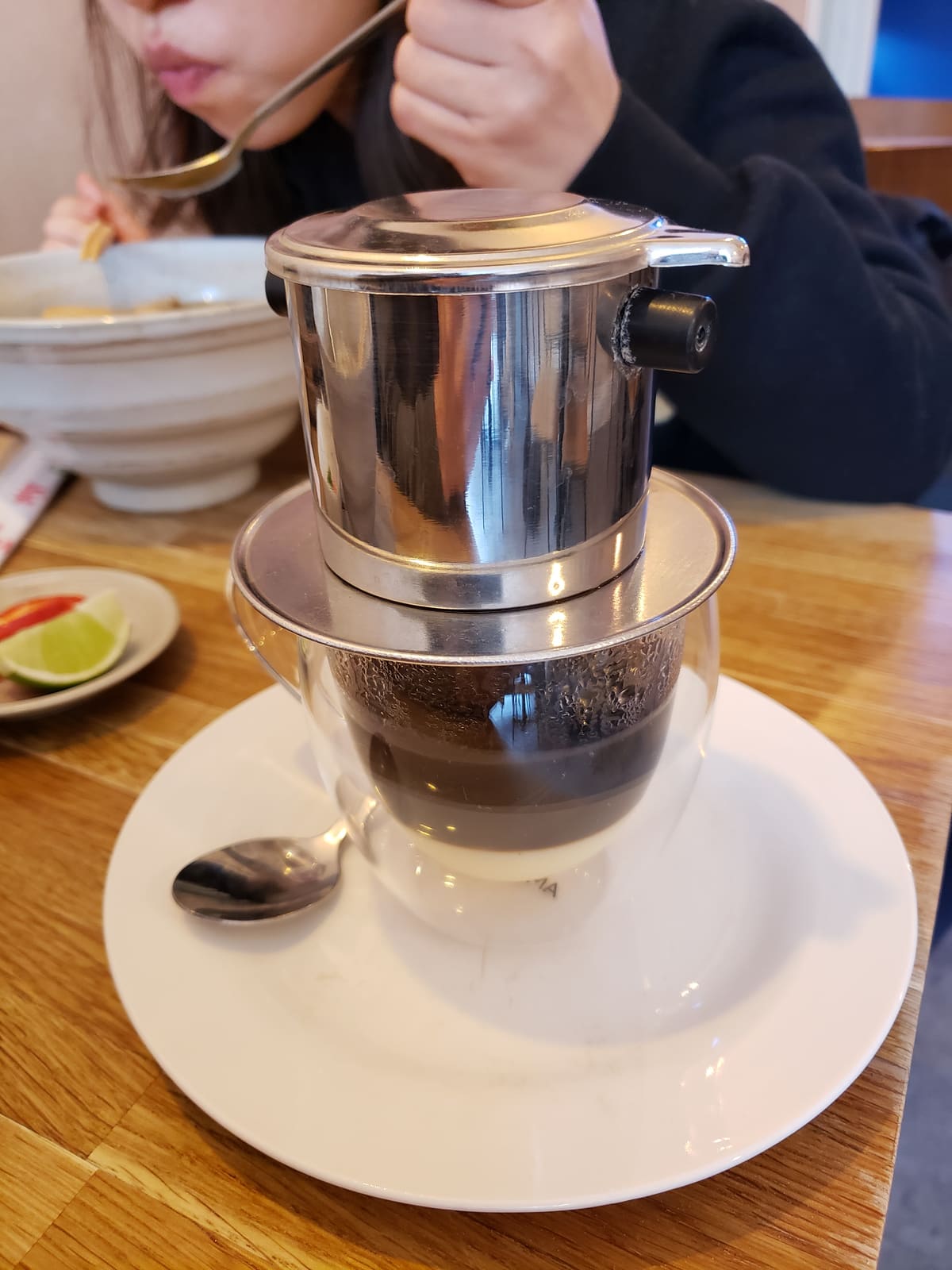
Vietnam is the world's second-largest coffee producer (after Brazil), 95% Robusta, and the country has a coffee culture that is dense, distinctive, and the most accessible in the world. The Vietnamese phin filter, the condensed milk, the ice, the dark roast — these are the elements of a coffee tradition that has been refined for 150 years.
Here's the guide.
The basics
The phin filter
The small metal drip filter, a phin. You put 2-3 heaped teaspoons of ground coffee in the chamber, press down the filter plate, put the phin on a cup, and pour 1 cm of hot water. The coffee drips through in 3-5 minutes. The result is a strong, dark, sediment-rich shot. Most Vietnamese people add condensed milk (cà phê sữa) and ice (cà phê đá) and drink it as the morning coffee.
The standard coffee order
- Cà phê đen (đá): Black coffee, served hot or with ice. The default for the bitter-coffee person.
- Cà phê sữa đá: Coffee + condensed milk + ice. The famous one. 80% of the time this is what you want.
- Cà phê sữa nóng: Same, hot. For cold mornings in the north.
- Cà phê trứng (egg coffee): Hà Nội specialty. Egg yolk + condensed milk + coffee. The famous one, served in a small cup with hot water underneath to keep it warm.
- Bạc xỉu: "White coffee" — more milk, less coffee, sweeter. Hà Nội specialty.
- Cà phê cốt dừa: Coffee + coconut cream. Modern Vietnamese invention, served in a glass with a coffee ice cube.
- Cà phê muối: Salted coffee. New style, popular in Huế and Hà Nội, coffee with a salted cream topping.
- Cà phê chanh: Coffee with lime and ice. Refreshing, summer drink, surprisingly good.
The beans
Vietnam is the world's second-largest coffee producer and the largest producer of Robusta. Robusta is the more bitter, more caffeinated, less aromatic species of coffee, and it's what 95% of Vietnamese coffee is made from. The traditional Vietnamese coffee culture has worked with this — strong phin-brewed Robusta with condensed milk and ice is a deliberate pairing, the bitterness balanced by the sweetness.
The famous coffee regions:
- Đắk Lắk (Central Highlands, the most famous): Buôn Ma Thuột, the coffee capital of Vietnam. The famous brands (Trung Nguyên, Highlands Coffee) source here.
- Lâm Viên (Đà Lạt area): Arabica, higher altitude, milder, more aromatic.
- Sơn La (north): Newer, more experimental. Some Arabica and some specialty Robusta.
The café culture
Vietnam has 50,000+ cafés, and the café culture is genuinely different from anywhere else. The standard café is: small (4-6 tables, no chairs or small stools), sidewalk-facing, with one guy in a motorbike helmet nodding at his phin at 6 a.m. The coffee is good, the price is $0.50-1.50, and the social function is to be there. You order, you sit, you drink slowly, you watch the traffic, you go.
Two layers above that: the "café vỉa hè" (sidewalk café, the famous Hanoi one) and the modern specialty café (Hanoi and Saigon, very good, third-wave roasting, single-origin pour-overs).
The best places to drink coffee
In Hà Nội
- Café Giảng (39 Nguyễn Hữu Huân) — the original egg coffee. Tiny, family-run, $1 per egg coffee.
- Café Đinh (13 Đinh Tiên Hoàng) — the second-generation egg coffee.
- Highlands Coffee (chain, good, the Vietnamese Starbucks)
- The Coffee House (chain, modern, good for sitting down)
- Manzi (14 Phan Huy Ích) — the modern specialty café. Beautiful 1920s French villa, good coffee, art space.
- Loading T (8 Chân Cầm, Old Quarter) — the modern Hà Nội café, single-origin pour-overs, $3-5 per cup.
In Saigon
- Cheese Coffee (Hồ Tùng Mậu) — the famous "cheese foam" coffee, the Instagram one.
- The Workshop (27 Ngô Đức Kế) — the Saigon specialty café. Single-origin, third-wave roasting, $4-7 per cup.
- Saigon Coffee Roastery (the warehouse roastery in District 1)
- Bạn Ở Đâu (Saigon's hipster, multiple locations)
- Highlands Coffee (chain, everywhere)
- Cà phê Vỉa Hè (Saigon's sidewalk café scene): District 1, the alleys around Bùi Viện walking street, anywhere with the small plastic stools. $1.
In Hội An
- Reaching Out Tea House (131 Trần Phú) — deaf-staff tea house, $5-10 per ceremony. Not coffee but worth it.
- Mót Hội An (150 Trần Phú) — the famous butterfly-pea-flower tea (a blue color, lemon-juice turns it purple). Instagram, but fun.
- The Espresso Station (1-3 Trần Phú) — the best specialty coffee in Hội An.
In Đà Lạt
- Windmills Café (Trần Hưng Đạo) — the Vietnamese coffee, plus the Đà Lạt highlands feel.
- Me Linh Coffee Garden (the countryside, half-day trip from Đà Lạt, you pick your own coffee and drink it)
The non-coffee Vietnamese drinks
- Trà đá (iced tea): Free at most restaurants, the default drink. 5,000 VND elsewhere.
- Nước mía (sugarcane juice): Fresh-pressed at every market. $0.50.
- Sinh tố (fruit smoothie): Mango, avocado, passion fruit, dragon fruit. $1-2.
- Sữa đậu nành (soy milk): The street breakfast drink, served hot from the carts. $0.30.
- Bia hơi (fresh beer): The Vietnamese draft, weak but cheap. $0.20 per glass.
- Rượu (rice wine): The northern variety, 30% alcohol, often with herbs or snake. Approach with caution.
The coffee ceremonies and tours
There are several coffee-themed experiences worth doing:
- Highlands Coffee tour (Ho Chi Minh City, free) — the chain's flagship store has a museum and a tour.
- The Workshop single-origin cuppings (Saigon, $20/person, Saturdays) — for the specialty coffee fan.
- Me Linh Coffee Garden (Đà Lạt, $5) — the pick-your-own experience.
- The Hà Nội coffee walk (DIY or with a guide, $30-50) — a 3-hour walk through 4-5 famous cafés.
What to know
Robusta vs. Arabica: If you only know specialty Arabica, Vietnamese coffee will taste bitter and heavy. The Vietnamese coffee tradition is built around Robusta, and the condensed milk, the ice, and the slow drinking are the answers. Embrace the difference.
Condensed milk: Almost all Vietnamese coffee uses sweetened condensed milk (sữa đặc), not evaporated. The sweetness is the point.
Ice: The ice in Vietnamese cafés is safe. The factories make it from clean water, and the country's ice industry is one of the few areas where hygiene standards are enforced.
Tip: $0.30-1.00 for the table tip is enough at most places. The chain cafés don't expect tips.