Sate Lilit

Sate Lilit
The recipe
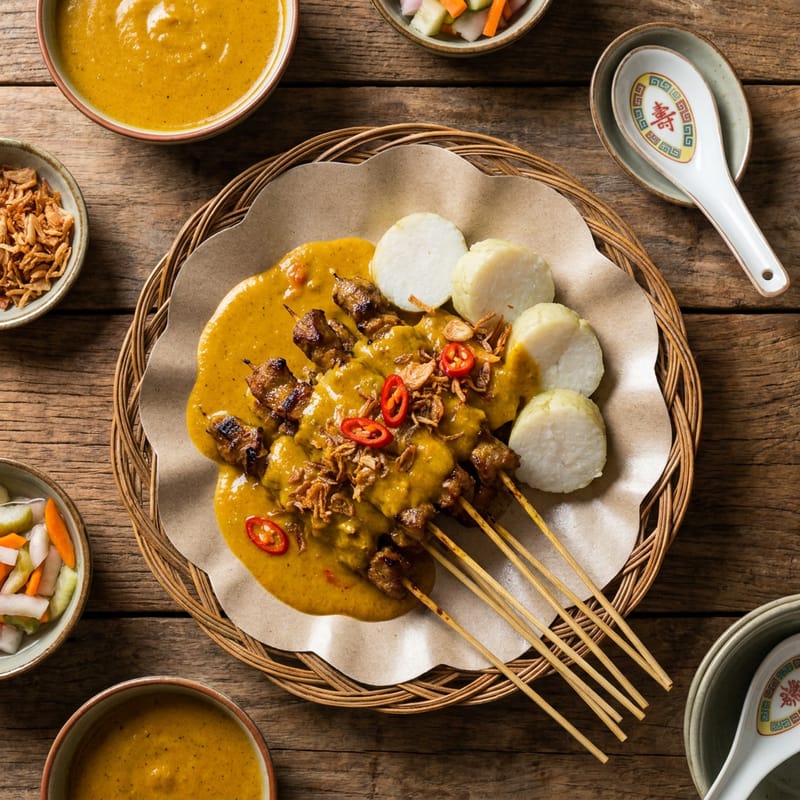
Sate Lilit is the signature satay of Bali. The difference: instead of cubed meat, the meat is finely minced and mixed with grated coconut, lime leaves, lemongrass, and a complex spice paste, then molded *around* the skewer (not threaded onto it) — the meat literally lilit, or 'wraps' the bamboo. It's then grilled quickly over coconut husk charcoal, giving it a distinctive smoky fragrance. Sate Lilit can be made with pork, chicken, fish (mackerel is traditional), or even turtle meat in traditional ceremonies. The minced texture means the flavor saturates every bite.
Ingredients
Method
💡 Tips from the kitchen
- ·Mincing the meat by hand gives the best texture — the knife should leave small irregular pieces, not a paste.
- ·Lemongrass stalks can replace bamboo skewers for a more authentic aroma.
- ·Sate Lilit is best eaten the day it's made — the grated coconut doesn't reheat well.
The story
Cultural
🌺
What it means
Bali's signature street food. Found at every warung, every beachside grill. Often served at Hindu ceremonies and offerings. Represents the Balinese Hindu tradition of *canang sari* — daily offerings to the gods that include food.
Across the archipelago
Sate Lilit Bali (the original, with pork), Sate Lilit Ayam (chicken, halal version), Sate Lilit Ikan (fish, coastal), Sate Lilit Sapi (beef, modern).
🍽️ Pairs with
- ·Nasi putih (steamed rice)
- ·Sambal matah (raw Balinese chili relish)
- ·Sayur urab (Balinese vegetable salad with coconut)
- ·Es teh manis
🥢 How to eat it
Pull the meat off the lemongrass skewer with your teeth — the lemongrass is too fibrous to eat. The sambal matah should be present on the side, but the meat is delicious on its own.
Did you know?
🇮🇩 Indonesia has 17,000+ islands — only 6,000 are inhabited.
Cook it yourself
Sate Lilit is one of Indonesia's heritage dishes. Want to try the recipe at home?
See the recipe →